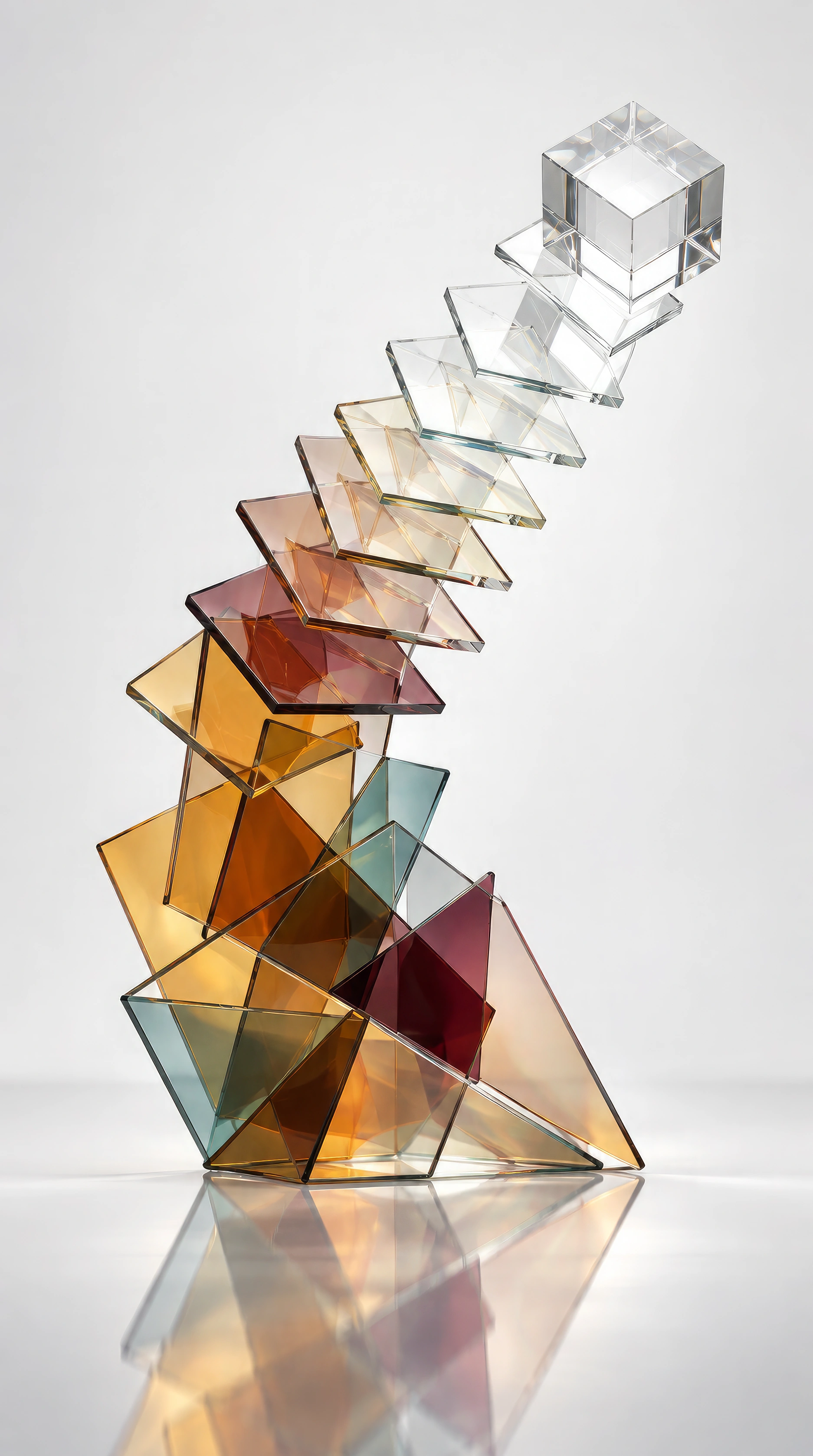
A visual system begins where a single image is no longer enough. I work not only with how an individual object looks, but with the logic that connects multiple images, formats and situations into one recognisable whole.
I build style, hierarchy, rhythm and rules that allow the system to develop without losing its character. To me, style is not surface decoration but aesthetic logic — the way colour, typography, space, movement and detail act together. Minimalism is not absence, but reduction to what is necessary, so that every element has a place, a reason and a relationship with the rest.
Each new solution should build upon what already exists rather than replace it. Recognition does not come from mechanically repeating the same forms, but from the consistency of the authorial gaze. A system may change, grow and accommodate different content, but it must preserve its inner measure.
My role is not to produce a series of separate visuals, but to create the conditions in which different solutions can emerge consistently. I set the direction, build the framework, observe where the system begins to break apart and return it to its own logic. Put simply: I protect the system from chaos.
Artificial intelligence can expand the field of this exploration, but it does not begin from an empty space. It enters a visual language shaped over more than 35 years through painting, icon painting, photography and observation. I do not automatically accept what is produced — I recognise the direction, filter out the noise and develop only what can become part of the whole.
Authorship remains in the idea, the aesthetic logic, the relationships between the individual elements, the choice of what should be developed and the decision of what should be rejected. I do not create images that merely resemble one another. I build a system capable of generating different images while remaining recognisable, alive and faithful to its internal logic.
For me, this is visual methodology — a system that builds systems.